Bedding · Materials & care
Wool or Cotton Bedding? A Practical Guide to Fill, Feel, and Care
The fiber closest to your skin and the material tucked inside your comforter may have different jobs. Wool can help manage warmth and moisture; cotton offers a familiar, breathable feel and often straightforward care. Choosing between them means looking past the label to consider the whole construction—and the nights you actually sleep.
There is a particular kind of confidence in a bedding label that says natural. It suggests a field, a clean breeze, a life uncomplicated by synthetic materials or confusing specifications. But the label does not tell you whether a comforter will feel light or substantial, whether it will suit a warm bedroom, or whether you can put it in the washing machine on Sunday morning. Fibers have personalities; products have construction details. The useful question is not simply wool or cotton, but where each fiber appears and what you want it to do.
In a comforter, cotton may form the outer shell, the inner batting, or both. Wool is generally used as fill, though it may also appear in blends. A cotton shell around wool batting, for instance, is not a cotton comforter in the same sense as one filled entirely with cotton. It is a layered object, and its feel depends on the relationship between the shell, the fill, the stitching, the weight and the space around it.
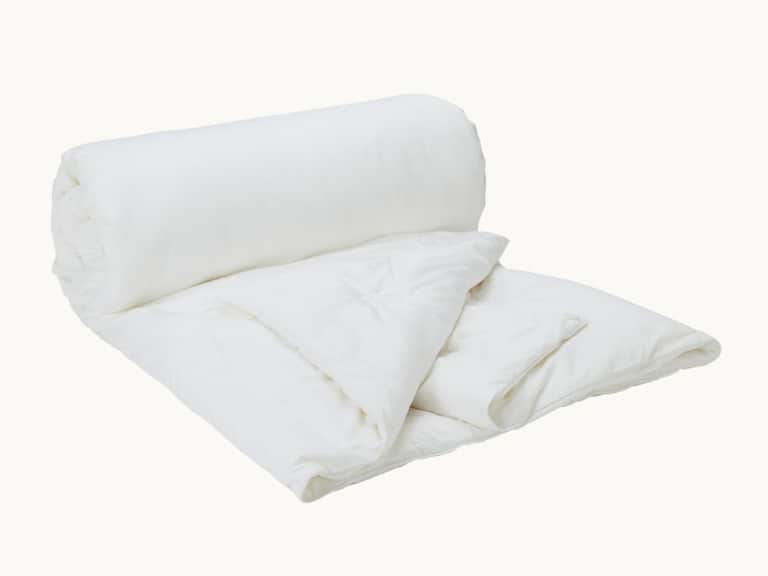
That distinction helps make sense of products such as the Naturepedic Organic Down Duvet Insert. It pairs down fill with a certified organic cotton shell. The cotton is the fabric you encounter on the outside; it does not turn the insert into a cotton-filled comforter. This is a useful example of why a material name, taken alone, can tell only part of the story.
This guide considers the practical trade-offs: how wool and cotton batting tend to feel, how they handle warmth and moisture, what care can involve, and how to choose a comforter for your climate, sleeping habits and budget.
First, separate the shell from the fill
The shell is the fabric encasing a comforter. It protects the filling, affects the surface feel and can influence how air moves through the bedding. Cotton is a common shell material because it is soft, breathable and available in a range of weaves, from crisp percale to smoother sateen. A cotton shell may be paired with wool, down, silk, synthetic fibers or cotton batting.
The fill is the insulating material inside. It supplies much of a comforter’s loft, weight and warmth. Wool batting is made from wool fibers arranged in a layer and held in place by stitching or quilting. Cotton batting is made from cotton fibers, often quilted into a similar layered structure. Each construction can vary in thickness, density and finish; a material category is not a guarantee of a particular hand-feel.
Construction matters because fibers do not perform in isolation. A tightly woven shell may feel smoother and contain fine filling more effectively. Quilting can keep batting evenly distributed, though the pattern and spacing affect how the comforter drapes. A duvet cover adds another layer between you and the insert, making the shell’s direct feel less important while increasing the value of convenient cover washing.
When a product description says “cotton comforter,” check whether that means cotton shell, cotton fill or both. Likewise, “wool comforter” may refer to wool fill enclosed in cotton fabric. Look for a material breakdown, fill weight or warmth option, construction details, dimensions and explicit care instructions. These practical facts often tell you more than a general claim about softness or comfort.
How wool bedding tends to feel
Wool is valued in bedding for its insulating and moisture-managing qualities. In a comforter, wool batting can feel softly substantial rather than exceptionally puffy. The impression varies with the amount of wool, the quilt pattern and the cover fabric. Some sleepers like the steady, close warmth of a wool layer; others prefer the airy loft of down or the lighter drape of a thinner fill.
Wool is often described as temperature regulating. In everyday terms, that means it can provide insulation while also taking up and releasing moisture, helping the bed feel less clammy when conditions change. It does not set a fixed temperature or guarantee that every sleeper will stay cool. Room temperature, pajamas, mattress materials, personal preference and the comforter’s weight all have a part in the result.
For someone who wakes feeling damp beneath a heavy blanket, moisture handling may be worth considering alongside warmth. For someone who tends to feel cold, the warmth of a medium or heavier wool comforter may be appealing. But the word wool alone is not a warmth rating. A lightweight wool comforter and a dense, heavy one can produce very different nights.
Wool products may also have specific upkeep requirements. Some are spot-clean or air-only; others permit restricted washing. Certain wool comforters should not go through an ordinary wash cycle, and agitation, high heat or a poorly controlled drying process may damage the fibers or cause shrinkage. Read the label before buying, not after an accident. A care routine that sounds manageable in a product description can be less attractive if your household relies on frequent machine washing.
A washable duvet cover is a useful first line of protection. Regular airing can refresh bedding between washes, while prompt attention to spills may prevent a small mark from becoming a larger cleaning problem. Airing is not a substitute for following the manufacturer’s care instructions, but it can reduce the need to launder an entire insert unnecessarily.
How cotton batting tends to feel
Cotton has a long, unshowy place in bedding: familiar, breathable and available in many weights. Cotton batting often feels flatter and more blanket-like than a lofty down fill. Depending on thickness and quilting, it can provide a little weight across the body without the springy lift some people associate with down. That sensation is subjective, but it is worth considering if you like bedding to rest close rather than balloon around you.
Cotton can absorb moisture, and it is not automatically cool simply because the fiber is familiar or the shell is made of cotton. A dense, heavy cotton-filled comforter may retain considerable warmth. A thinner cotton layer may be useful in a warmer room or as part of a flexible bedding system. The quantity of fill and the way it is quilted influence warmth and drape just as much as the fiber name.
Care can be a point in cotton’s favor, particularly when the specific comforter is machine washable. Still, cotton products vary: some require gentle cycles, low heat or line drying, and some may shrink if washed or dried too aggressively. Never assume that a cotton shell means the whole comforter can be washed like a cotton sheet. The fill, stitching and size of the item all matter, as does whether your machine can handle its bulk without crowding it.
Cotton batting can compact over time, particularly if it is washed frequently or stored in a way that compresses it. Quality quilting helps keep the fill from shifting, but no construction makes care irrelevant. If the comforter is intended to last for years, a duvet cover, sensible storage and attention to the care label can make a more meaningful difference than a small variation in thread count.
For renters, students and anyone who values a straightforward laundry routine, a washable cotton comforter may be appealing. For another household, the preferred choice may be a wool insert protected by a washable cover and cleaned only occasionally. The right answer depends less on a universal ranking of fibers than on how much maintenance feels reasonable.
Wool vs. cotton bedding: the practical differences
The comparison is easiest when translated into everyday questions. Do you sleep hot or cold? Do you want a fluffy layer or a closer, more grounded feel? Is frequent machine washing essential? Does your room change temperature sharply across the seasons? A quick side-by-side can narrow the field, though the specifications of an individual product should always take precedence over generalizations.
- Warmth: Both fibers can be used in warm or light bedding. The fill weight, thickness and construction matter more than the fiber name by itself. Compare the manufacturer’s stated warmth options when available.
- Moisture: Wool is commonly chosen for its ability to absorb and release moisture. Cotton also absorbs moisture, but the overall sleeping feel depends on its weight, weave and how quickly the bedding can air out.
- Loft and drape: Wool batting often lies in a more even, softly substantial layer. Cotton batting may feel flatter or more blanket-like. Neither description applies uniformly to every construction.
- Care: Some cotton comforters are machine washable; many wool comforters call for spot cleaning or carefully limited laundering. Confirm the instructions for the exact product rather than relying on fiber assumptions.
- Layering: Either fill can work inside a duvet cover. A cover also makes it easier to change the look of a bed and to wash the layer that receives the most everyday contact.
- Cost over time: The purchase price is only one consideration. Cleaning requirements, durability, seasonal flexibility and the cost of replacing an unsuitable comforter all contribute to value.
These are tendencies, not verdicts. A thin wool comforter may be cooler than a thick cotton one; a washable cotton insert may be less convenient than a wool product designed for careful home laundering. The exact construction decides how a general material behaves in the bedroom.
What the Naturepedic example shows
The Naturepedic Organic Down Duvet Insert makes a useful point about interpreting bedding descriptions, even though its fill is down rather than wool or cotton. Its 750-fill-power USA soft white duck down provides insulation, while the certified organic cotton shell encloses it. The insert uses a stitch-through box pattern to help maintain more even distribution and is offered in lightweight and all-season options.
That combination illustrates a broader principle: the shell and fill answer different questions. The shell helps determine the fabric against your duvet cover or skin; the fill contributes much of the comforter’s warmth and loft. A cotton shell does not mean the insert contains cotton batting, just as a wool-filled comforter with a cotton shell is not accurately described by the shell alone.
It also illustrates why product descriptions deserve a careful reading. The listed sizes, warmth options, certifications and care guidance all affect whether an insert suits a household. A product may be presented as washable only under particular conditions, or the maker may recommend spot cleaning. Check the current label and instructions before purchase, especially for an item that is large, costly or difficult to dry at home.
For comparison, wool-filled comforters commonly put the focus on moisture management and a naturally insulating layer, while cotton-filled comforters offer a different hand-feel and may be attractive where conventional laundering is a priority. Neither material is automatically preferable. The useful comparison is between complete products with similar warmth levels, sizes and care expectations—not between two words on a tag.
Choose for your sleep temperature, not the season’s marketing
“All-season” sounds as if one comforter can solve every climate. In practice, it means a product intended to work across a range of conditions, not a promise that it will suit every sleeper in every room. Someone who sleeps hot in a centrally heated apartment may need a lighter layer through much of the year. Someone in a drafty room may find the same comforter insufficient in winter.
Start with the bedroom. Consider the lowest temperature you regularly experience at night, whether the heat stays on, whether windows are drafty and whether you use a top sheet or extra blanket. Then consider your own habits: do you sleep beneath a duvet all night, kick it away after an hour, or share it with someone who prefers a different level of warmth? Those answers are more useful than choosing a fill because it sounds inherently luxurious.
If two people share a bed but sleep at different temperatures, a dual-weight arrangement or two separate layers may be more practical than trying to find a single compromise. A lighter comforter can be paired with a blanket in colder weather. A removable duvet cover makes it easier to adapt the bed without replacing the insert. Layering also gives you options when seasons change slowly—or when the forecast and indoor heating disagree.
For warm sleepers, compare lighter weights and pay attention to the shell fabric and duvet cover as well as the filling. For cold sleepers, check whether a product offers a winter or heavier option, and consider whether the comforter’s dimensions provide adequate coverage. A blanket that slips away from the shoulders in the night may be frustrating regardless of its fiber content.
Care is part of the purchase price
A comforter that needs specialist cleaning may still be the right choice, but that requirement belongs in the budget. So does the trouble of fitting a bulky insert into a small machine, drying it thoroughly and finding somewhere to store it between seasons. An inexpensive product that is awkward to maintain can become costly in time and frustration. A more expensive one may last longer—or may simply be more expensive. Value depends on actual use.
Before buying, locate the care instructions and read them all the way through. Look for whether the item can be machine washed, whether a front-loading machine is required, what detergent is allowed, and how the comforter should be dried. If air drying is recommended, ask yourself whether you have the space and time to do it fully. Damp fill can develop an unpleasant odor and may not recover its intended loft.
Use a duvet cover when the design allows it. It shields the insert from body oils, dust and ordinary spills, and is usually easier to wash than a comforter. Confirm that the insert has corner ties or loops if you want to keep it from migrating inside the cover. A correctly sized cover matters, too: an overly large cover lets the filling drift, while a tight one can compress the loft.
For storage, let bedding dry completely and avoid sealing it away while damp. A breathable storage bag is generally more suitable than a tightly compressed plastic container for long periods. Check the manufacturer’s guidance, especially for wool, which can be sensitive to heat and prolonged compression. A little care at the end of a season can make the first cold night less of a rummage through bedding that smells like the back of a cupboard.
A simple decision framework
If you are choosing between wool and cotton bedding, begin with the problem you want to solve rather than the fiber you have heard praised. If your main complaint is waking clammy, investigate moisture management and choose a weight that does not leave you overheated. If the comforter feels too lofty or too light, consider a cotton-filled option or a more substantial construction. If frequent washing is non-negotiable, prioritize products with explicit, convenient machine-care instructions.
Then compare products on equal terms: similar size, similar warmth, comparable shell fabric and a clear description of fill. Note the warranty, return policy and care instructions. If the information is vague, that is a reason to ask questions before spending—not an invitation to assume the most favorable interpretation.
- Choose wool when its insulation and moisture-handling qualities suit your sleeping habits and you are comfortable with the stated care routine.
- Consider cotton fill when you prefer a less lofty feel, want a familiar natural fiber or find a washable construction that fits your household.
- Choose a cotton shell when you like its surface feel, but remember that the shell does not identify the fill.
- Compare warmth options and fill weight rather than assuming that wool is always warmer or cotton always cooler.
- Use a duvet cover and check its dimensions and fastening points to protect the insert and keep it in place.
There is no universal winner in the wool-versus-cotton question. Wool may be a thoughtful choice for a sleeper who values moisture management and accepts more particular care. Cotton may suit someone who prefers a familiar, close drape or needs a reliably washable option. The best comforter is not the one with the most persuasive material story; it is the one whose warmth, feel and upkeep make sense in the room where you sleep.
In the end, bedding is an unusually intimate household purchase. It must work in the dark, at the hour when nobody is comparing fiber specifications. Start with the full construction, read the care label, and be honest about whether you run warm, sleep cold or simply want less laundry. A few minutes of attention before buying can spare you a long season of tugging at the wrong blanket.