Bedding · Buying and care guide
What to Check Before Choosing a Washable Wool Comforter
Wool has a reputation for being both wonderfully practical and rather particular. It can breathe, hold warmth and manage moisture; it can also demand more care than a label’s reassuring word “washable” might suggest. Before choosing a wool comforter, look closely at the fill, the shell, the quilting and—above all—the exact washing and drying instructions.
Published October 29, 2026
A comforter is not usually purchased in a state of great philosophical excitement. One is cold, or moving into a new apartment, or tired of a blanket that slips away in the night. Then comes the vocabulary: fill weight, shell, loft, quilting, baffle, wool, washable. The words sound straightforward until they appear together on a product page, where “washable” may mean a careful cold-water cycle followed by a long, patient drying process—not a casual trip through the laundry with everything else.
A washable wool comforter can be an appealing choice for sleepers who want breathable warmth and a natural fill. But the fiber name alone does not tell you how a particular comforter behaves in a washing machine. Processing, batting, quilting and shell fabric all matter. So does the size of your washer, your tolerance for drying projects, and whether you plan to protect the comforter with a duvet cover.
The sensible approach is not to assume that wool is delicate or indestructible. It is to treat the care label as part of the product’s design. Before comparing prices or imagining a bed newly transformed, find out what “washable” means for the specific comforter you are considering.
Start with what “washable” actually promises
The phrase “washable wool” can describe a useful feature, but it is not a complete set of instructions. A manufacturer may recommend machine washing under particular conditions, such as cold water, a gentle or wool cycle, no agitation, and a specific kind of detergent. Another wool comforter may be spot-clean only, professionally cleaned, or refreshed by airing rather than washed routinely. The care directions are product-specific; they should not be inferred from the fiber content.
Look for instructions that answer practical questions in plain language:
- Is machine washing permitted? Confirm that the instructions apply to the finished comforter, not merely to the wool fiber or a removable cover.
- What kind of washer is required? Some bedding needs a front-loading machine or a washer without an agitator. A comforter that twists or gets crowded may not clean or rinse evenly.
- Which cycle and water temperature are specified? “Gentle,” “wool,” and “delicate” can vary between machines. Follow the product’s wording rather than guessing.
- What detergent is allowed? Wool-specific detergent may be recommended. Avoid assuming that a familiar household detergent, bleach or fabric softener is suitable.
- Is spinning permitted? Some instructions specifically prohibit a spin cycle or vigorous agitation. That detail can affect whether home laundering is realistic.
- How should the comforter be dried? “Air dry” is not the same as “tumble dry low,” and the permitted method should be explicit.
When instructions are incomplete, do not fill the gap with optimism. Contact the manufacturer or retailer before purchase, and keep the answer with your care information. A comforter can be called washable and still be a poor fit for a household whose laundry setup cannot meet the stated requirements.
Understand the wool—and the construction around it
Wool’s appeal is not simply that it is warm. Its fibers can help manage moisture and provide insulation without the sensation of a dense, motionless blanket. That combination makes wool comforters attractive to people who want a breathable layer, including sleepers who find some thick synthetic fills stifling. How a particular comforter feels, however, depends on the amount of fill, the construction and the room in which it is used. No fiber can guarantee that every sleeper will feel cool or warm in the same way.
Check the stated fill weight or density when it is available. A lightweight wool comforter may suit a warm bedroom or someone who prefers a thinner covering; a heavier fill may feel more substantial. Weight alone does not determine warmth, but it is useful context when comparing products. If the manufacturer provides seasonal guidance, use it as a starting point—not a substitute for considering your own bedroom temperature and bedding layers.
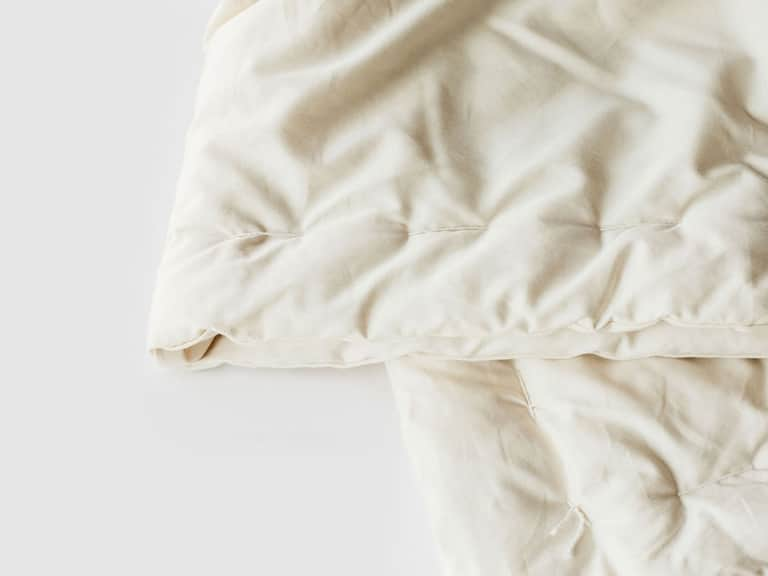
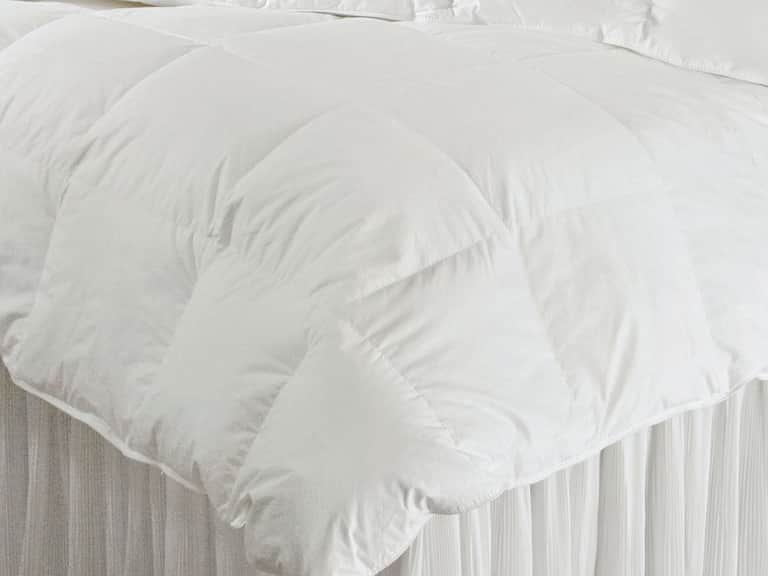
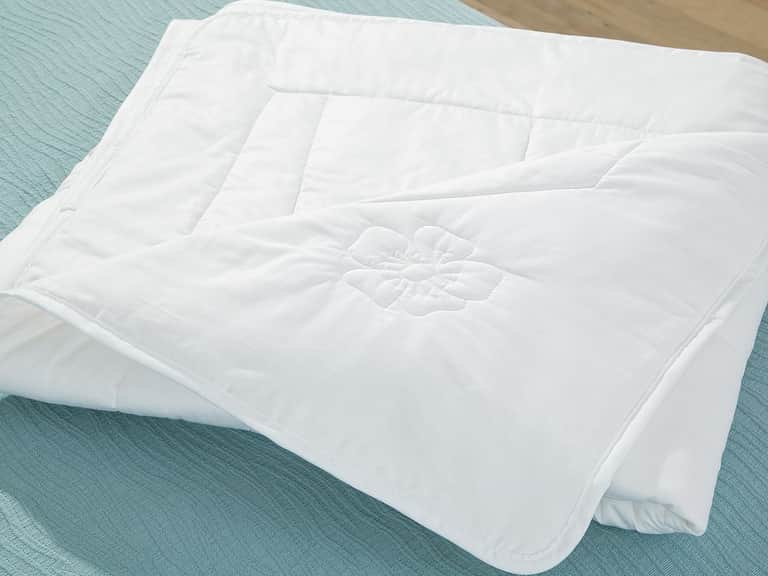
Then inspect the stitching. Quilting, channels or other forms of compartmental construction help keep filling distributed rather than gathered in one corner. A well-secured fill is relevant to comfort and to the way a comforter holds its shape over time. When washing is allowed, construction matters even more: repeated movement and handling can put stress on seams and batting. Look for a clear description of how the wool is held in place, and whether the maker gives any special washing precautions.
The outer shell deserves equal attention. Cotton sateen, for instance, can offer a smooth surface, while other cotton weaves may feel crisper or more textured. A shell is also a working part of the comforter: it contains the fill and meets the duvet cover or sheets night after night. Read the material description, check whether the shell is washable under the same conditions as the fill, and make sure you are not confusing the comforter with a removable duvet cover. A washable cover does not automatically make the insert washable.
The washing machine is part of the decision
Before buying, consider the most ordinary detail in the room: the washer. A queen- or king-size comforter may be technically washable yet too large to move freely in a standard household machine. Overcrowding can interfere with rinsing and make the comforter difficult to handle when wet. A washer’s stated capacity is not always a reliable guide to how comfortably a bulky bedding item will fit; the comforter needs room to move according to its care directions.
If the instructions call for a front-loader, no agitator, a wool cycle or a no-spin wash, check whether you have that option. If not, identify a suitable laundromat or laundry service before deciding. This is not a failure of the comforter; it is simply a matter of matching its care needs to the facilities available. A product that is easy to wash in one home may be inconvenient in another.
Wet wool bedding can be heavy. Plan how you will transfer it from the washer without pulling at the fabric or letting the whole weight hang from one edge. If you know that lifting a saturated comforter would be difficult, that is a meaningful consideration. Practical comfort includes the work required to maintain the comforter, not just the pleasant sensation of climbing beneath it.
Do not wash a new wool comforter just to test it. Washing frequency should follow the care guidance and the actual need. A duvet cover can intercept much of the ordinary dust and skin oils that would otherwise reach the comforter, and it is generally easier to remove and launder. Regular airing, when recommended, may also help refresh bedding between washes. A cover is not a promise that the comforter will never need cleaning; it is a straightforward way to reduce unnecessary exposure to soil.
Drying is not an afterthought
When shoppers compare wool comforters, drying instructions sometimes get less attention than the wash cycle. That is understandable: washing sounds like the main event. In practice, drying can be the more consequential part of the process. Wool batting needs to dry thoroughly, and the product’s construction may be affected by excess heat, rough handling or an unsuitable drying method.
Read whether the maker permits tumble drying, and if so, at what temperature. Some washable wool comforters can be dried on low heat; others may require air drying. Some instructions combine the methods, recommending a short low-heat tumble followed by drying flat. These directions are not interchangeable. Do not assume that a setting labelled “low” on one machine corresponds exactly to another machine’s setting, or that the comforter can be left in a hot dryer simply because the cycle has ended.
Plan for the time and space drying may require. A large comforter laid flat needs a clean, suitable surface and enough airflow. If a product’s guidance calls for it to be dried in the sun or finished flat, ask whether that is feasible in your home and climate. A comforter left damp in a heap is not ready to go back on the bed. Check that it is fully dry before storing or covering it, and follow any guidance about reshaping or redistributing the fill.
This is where the word “washable” becomes less like a promise of convenience and more like a description of a process. The right product is not necessarily the one with the shortest instructions. It is the one whose instructions you can realistically follow without improvising at the most delicate stage.
A closer look at Suite Sleep’s washable wool comforter
Suite Sleep’s washable wool comforter is one example of a product whose appeal rests partly on its care instructions. It is described as a lightweight comforter with a super-washed wool filling and a 100% organic cotton sateen cover. The cotton shell is quilted to the wool, a construction intended to help keep the filling in place. It is offered in Twin, Full/Queen and King sizes, and the product information lists a three-year warranty against defects.
The care guidance says that the comforter can be machine-washed on a gentle cycle in a front-loading washer, then air-dried in the sun or tumble-dried on a low setting until almost dry. It advises finishing the drying process flat to help prevent clumping and felting. It also recommends a duvet cover to help protect the comforter and reduce the need for washing.
These details make the product worth considering for someone looking for a wool comforter with stated machine-washing instructions. They also offer a useful checklist in miniature: verify the washer type, the cycle, the permitted drying method and the flat-drying step. The final instruction is not decorative fine print. It affects whether the product suits your laundry habits and available drying space.
Before purchase, confirm the current care label and product guidance, particularly if your washer lacks a front-loading drum or if you rely on a laundromat. Check the selected size against your bed and duvet cover, and verify the current warranty terms. The word “washable” is helpful; the instructions behind it are what make it actionable.
Compare washable wool with other comforter fills fairly
A wool comforter is not automatically the best choice simply because it is washable. Some wool comforters are not intended for routine machine washing, while other materials may have simpler laundry requirements. Compare whole care routines rather than placing one reassuring adjective beside another.
For example, the DownTown Company Summer Linen Summer Comforter is described as a lightweight cotton-linen blend with a cotton sateen cover. Its listed care method is dry cleaning, despite its breathable, moisture-managing materials. It may suit someone looking for a light layer, but its care instructions are different from those of a machine-washable wool comforter. This comparison illustrates a useful rule: natural fibers do not necessarily mean home laundering, and “breathable” says nothing by itself about how an item should be cleaned.
Likewise, compare fill, weight and construction with your needs rather than treating “natural” or “hypoallergenic” as universal performance guarantees. Wool may be appealing for moisture management and a breathable feel, but a person’s comfort depends on their own sensitivities, bedding layers and bedroom conditions. If allergies or skin sensitivities are a concern, consider the full product construction and cleaning directions, and seek professional guidance where appropriate.
Price deserves the same practical scrutiny. An inexpensive comforter that must be replaced quickly—or sent out for care you did not anticipate—may not be the economical choice. A higher initial price does not guarantee longer life either. Look at the warranty, the durability of the stitching, the accessibility of replacement duvet covers and the amount of care you are prepared to provide. The best value is usually found in a product whose routine you can sustain.
Questions to ask before you buy
Product descriptions can be persuasive and still leave important blanks. Before choosing among wool comforters, use a short set of questions to make the comparison less hazy:
- Does “washable” apply to the complete comforter, including its fill and shell?
- What exact washer type, cycle, water temperature and detergent does the care guide specify?
- Can the comforter be spun, or must spinning and agitation be avoided?
- Does it need to be dried flat, and how long might the full drying process take?
- Will the chosen size fit comfortably in the washer and in the duvet cover you already own?
- How is the wool secured, and what does the warranty cover?
- Is the comforter lightweight, medium or intended for colder conditions—and does that match your bedroom?
- Would a duvet cover reduce the frequency of cleaning and make everyday care easier?
It can also help to read the care label before removing packaging or using the comforter. Keep the instructions accessible rather than trusting memory. If the wording on the product page differs from the sewn-in label, ask the manufacturer which directions take precedence. And if a stain occurs, spot treatment with an unapproved product may create a larger problem than the stain itself. Follow the care guidance, and seek advice when the instructions do not address the situation.
A comforter should fit the life around it
There is a small domestic pleasure in bedding that works without much negotiation. Wool can offer a satisfying balance of warmth and breathability, but a washable wool comforter is only convenient when its washing and drying requirements match the household that owns it. That means considering the laundry room as carefully as the bedroom.
Check the care instructions before you fall for the fiber. Look at the shell, the fill, the quilting and the drying method. Ask whether your washer can handle the chosen size, and whether you have somewhere to finish drying it flat if required. A duvet cover can make regular upkeep simpler; careful laundering, when needed, can help preserve the comforter’s feel and construction. None of these steps is especially glamorous. All of them are more useful than discovering the rules after the comforter has gone through the wash.
In the end, the right wool comforter is not merely one that sounds natural, breathable or washable. It is one whose warmth suits your nights and whose care fits your ordinary life. That is a more modest standard than a promise of effortless sleep, and a more reliable one.